

For over 20 years, Natasha Meyers, Esq. has been helping clients throughout New York get through the most trying times of their lives. The landscape of family law in New York has shifted dramatically since the legalization of same-sex marriage, yet the procedural complexities of dissolution remain unique. Legal precedents established in 2015 fundamentally changed how same-sex couples approach separation, but the path to a final decree still requires meticulous attention to New York Domestic Relations Law. This guide outlines the precise steps for filing a same-sex divorce on Long Island, ensuring your rights are protected from the initial petition to the final judgment.
Establishing Residency and Jurisdiction
Before initiating any legal action, you must confirm that New York State courts have the authority to hear your case. New York is a "domicile state," meaning at least one spouse must have lived in New York for a continuous period of one year immediately before filing. New York State Unified Court System guidelines emphasize that this residency requirement applies equally to same-sex couples as it does to opposite-sex couples. (FAQ The Meyers Law)
For residents of Suffolk and Nassau Counties, this often involves proving that your primary home, financial accounts, and community ties are rooted in Long Island. If you have recently moved to Long Island from another state, you may need to wait to file locally. However, if your marriage was performed in New York, even if you now reside elsewhere, you might still have options. The Meyers Law Group, P.C. specializes in navigating these jurisdictional nuances for clients in Suffolk County, Nassau County, and Manhattan. (The Meyers Law Group)
Choosing the Correct Grounds for Divorce
New York is a "no-fault" divorce state, which simplifies the process for many same-sex couples. You can file for divorce on the ground of "irretrievable breakdown of the marriage" for a period of at least six months. This means you do not need to prove adultery, cruelty, or abandonment. New York State Senate legislation has streamlined this process to reduce conflict and cost. (The Meyers Law Group)
However, in high-net-worth same-sex divorces, fault-based grounds may still be relevant. If one spouse has dissipated marital assets or engaged in conduct that impacts the equitable distribution of property, citing specific grounds can strengthen your position. Our firm provides aggressive representation when necessary, ensuring that financial misconduct is properly documented and addressed in court.
Navigating Equitable Distribution
New York follows the principle of "equitable distribution," not necessarily "equal distribution." This means the court divides marital property fairly, which may not always be a 50/50 split. Legal definitions of equitable distribution consider factors such as the duration of the marriage, the age and health of both parties, and their future financial prospects.
For same-sex couples, this process can be complicated by the history of the relationship. Assets acquired before the legal recognition of the marriage may be considered separate property, while those acquired during the marriage are marital. Detailed financial disclosure is mandatory. Both parties must exchange sworn financial statements detailing income, assets, debts, and expenses. Failure to disclose assets can lead to severe legal penalties and delays in the finalization of the divorce.
Addressing Child Custody and Support
When children are involved, the court's primary focus is the "best interests of the child." This standard applies regardless of the parents' sexual orientation. Child welfare standards require a comprehensive parenting plan that outlines custody arrangements, visitation schedules, and decision-making responsibilities.
Same-sex couples may face unique challenges in establishing parental rights, especially if one partner did not adopt the child. Our firm assists with paternity proceedings, adoption, and modification of parenting plans to ensure that both parents' rights are legally recognized and protected. Child support is calculated using New York State guidelines, which consider the income of both parents and the number of children involved.
Filing the Summons and Complaint
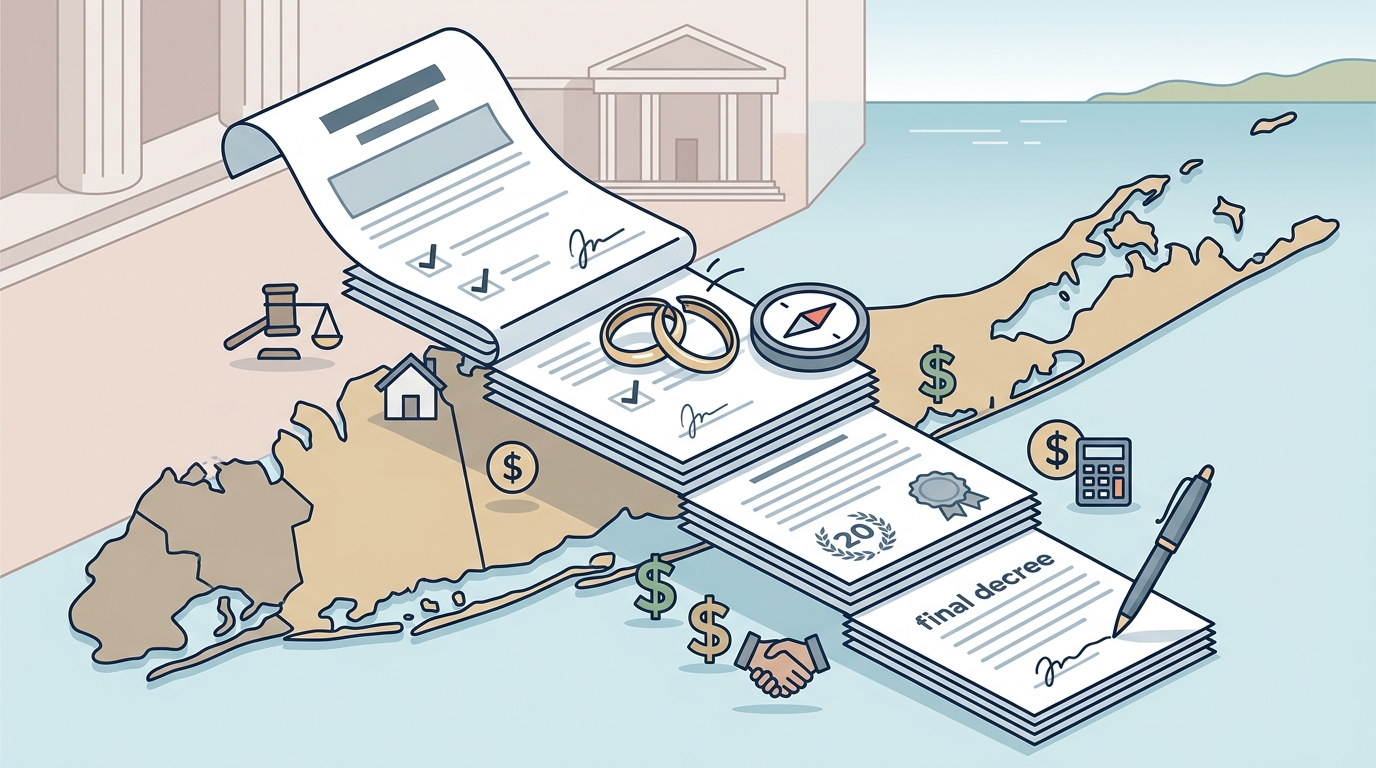
The formal process begins with the preparation and filing of a Summons and Complaint with the Supreme Court in your county. This document outlines your requests regarding divorce, child custody, support, and property division. Court filing procedures require specific forms and fees, which vary by county.
Once filed, the Complaint must be served to the other spouse. Service can be accomplished through a process server, certified mail, or by agreement. If the spouse cannot be located, the court may allow service by publication. The Meyers Law Group, P.C. handles all aspects of document preparation and service, ensuring that procedural deadlines are met and that your case proceeds efficiently.
Mediation vs. Litigation Strategies
Deciding between mediation and litigation is a critical strategic choice. Mediation involves a neutral third party helping the couple reach an agreement. It is often faster, less expensive, and less adversarial. American Bar Association data suggests that mediated settlements have higher compliance rates than litigated judgments.
Litigation is necessary when parties cannot agree on key issues. In contested divorces, your attorney will advocate for your interests in court, presenting evidence and arguments to support your position. Our firm is proficient in both mediation and divorce litigation, allowing us to tailor our approach to your specific needs and circumstances.
Key Takeaways
- Residency Requirement: At least one spouse must have lived in New York for one year prior to filing.
- No-Fault Option: "Irretrievable breakdown" is the most common and straightforward ground for divorce.
- Equitable Distribution: Marital property is divided fairly, not necessarily equally, based on multiple factors.
- Child Custody: Courts prioritize the "best interests of the child" in all custody determinations.
- Financial Disclosure: Full and honest disclosure of assets and debts is legally mandatory.
- Legal Representation: Experienced counsel is vital for navigating complex financial and parental rights issues.
- Mediation Benefits: Mediation can reduce costs and conflict compared to traditional litigation.
Frequently Asked Questions
How long does a same-sex divorce take in New York?
The timeline varies based on complexity. Uncontested divorces may take three to six months, while contested cases can take a year or longer due to court schedules and discovery processes.
Do same-sex couples have the same divorce rights as opposite-sex couples?
Yes. Since the legalization of same-sex marriage, New York law treats same-sex divorces identically to opposite-sex divorces under the Domestic Relations Law.
What is equitable distribution?
Equitable distribution is the legal process of dividing marital property fairly, considering factors like marriage duration, income, and contributions, rather than splitting everything 50/50.
Can I file for divorce if my spouse lives out of state?
You may file in New York if you meet the residency requirements. However, enforcing orders against an out-of-state spouse can be more complex and may require additional legal steps.
What is the role of a parenting plan?
A parenting plan outlines custody, visitation, and decision-making responsibilities. It is a crucial document that helps ensure stability and clarity for the children involved.
How does The Meyers Law Group handle high-net-worth divorces?
We employ forensic accounting experts and strategic litigation tactics to protect complex assets, including businesses, investments, and international holdings.
Is mediation mandatory in New York?
Mediation is not mandatory but is often encouraged by courts. It can be a highly effective way to resolve disputes without the cost and stress of a trial.
Contact The Meyers Law Group
Navigating a same-sex divorce on Long Island requires a legal partner who understands both the law and the unique dynamics of your relationship. The Meyers Law Group, P.C. has been practicing family law since 2003, providing compassionate and aggressive representation to clients in Suffolk County, Nassau County, and Manhattan. We are dedicated to helping you move towards a brighter future.
Call us today for a free consultation at 631-496-1484 or contact us online to schedule your appointment.